
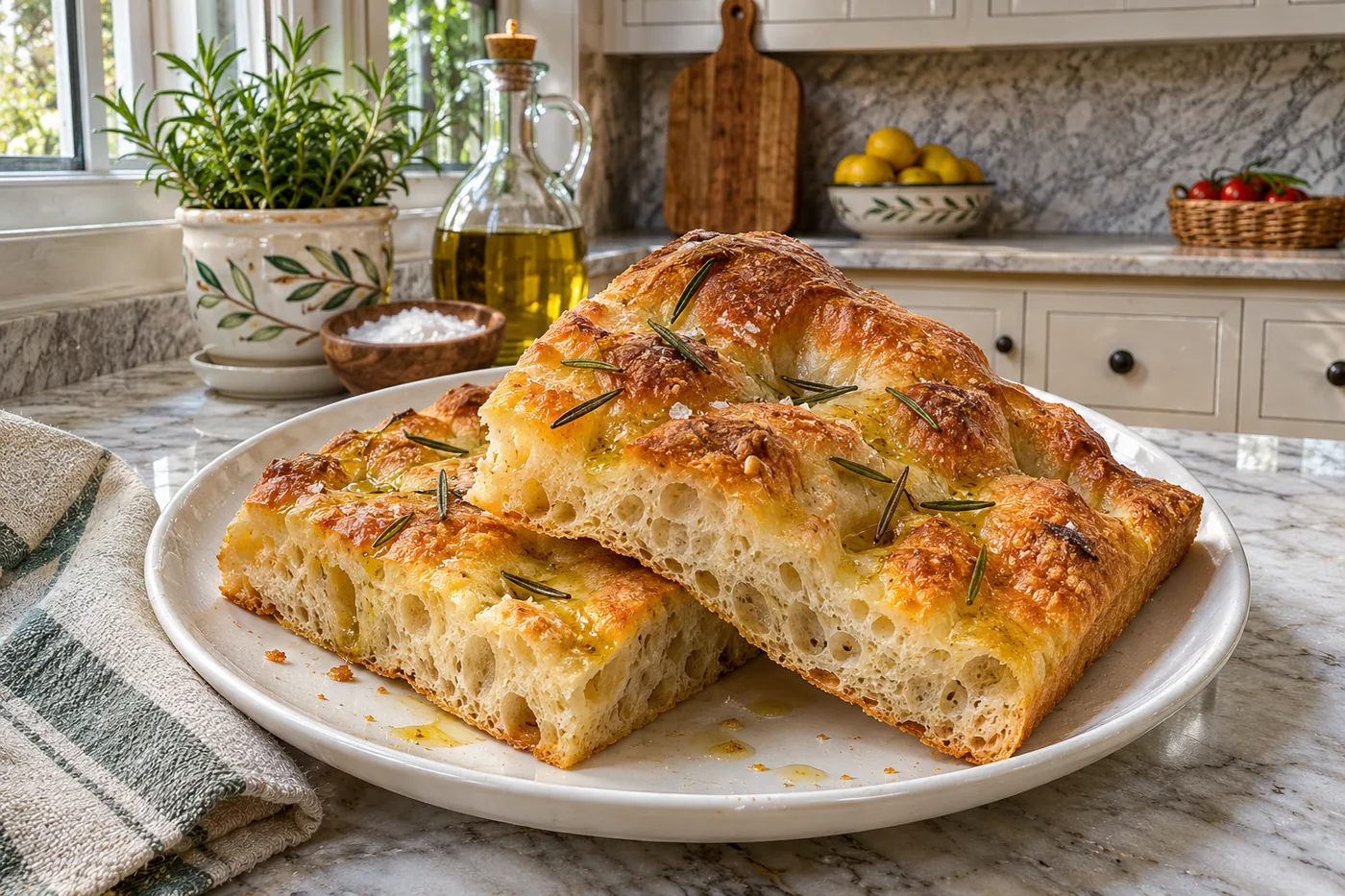
The first time I pulled a golden-brown focaccia out of the oven, the aroma filled my kitchen like a warm hug. I couldn’t believe how simple it was to create this fluffy, herb-infused bread at home.
What sets this focaccia apart is the generous sprinkle of fresh rosemary and a drizzle of olive oil that creates a crisp, flavorful crust, pairing perfectly with its tender interior.
Why This Recipe Works
- Hydration Level: Using 1.75 cups of warm water hydrates the flour thoroughly, creating a beautiful, chewy texture in the focaccia. The key is to ensure the water is just warm enough to activate the yeast without cooking it.
- Yeast Activation: The combination of sugar and warm water helps activate the active dry yeast, allowing it to bloom and produce carbon dioxide. This process creates those lovely air pockets that make the focaccia light and fluffy.
- Olive Oil's Role: Incorporating 1/2 cup of olive oil not only adds flavor but also contributes to the overall structure of the bread. I tried reducing the oil once, and the focaccia turned out drier and less flavorful, proving that oil is essential for that rich taste.
- Fresh Herbs: Adding fresh rosemary amplifies the aroma and flavor profile of the focaccia. I found that using freshly chopped rosemary instead of dried made a noticeable difference in the taste, making each bite feel vibrant and fragrant.
Ingredients
What You'll Need
- 4 cups all-purpose flour this is the base for your focaccia; look for a brand with high protein content for better structure.
- 2 tbsp salt salt enhances flavor and controls yeast fermentation; don't skip it!
- 1 tbsp sugar helps activate the yeast and adds a hint of sweetness to the dough.
- 2 tbsp active dry yeast make sure it's fresh for the best rise; check the expiration date.
- 1.75 cups warm water, about 110°F this temperature helps activate the yeast without killing it.
- 1/2 cup olive oil extra virgin olive oil adds rich flavor; use a good quality for the best results.
- 1 tbsp fresh rosemary, chopped this adds a fragrant, herbal note that pairs beautifully with the dough.
- 1 tbsp coarse sea salt, for topping this adds a crunchy finish and bursts of flavor on top.
When making focaccia, the quality of your ingredients really shines through. Opt for fresh yeast for the best rise, and choose a flavorful olive oil to enhance the overall taste. Fresh rosemary is key for that aromatic touch, so don’t settle for dried if you can help it.
Easy Substitutions
- Dairy-free: swap olive oil for avocado oil — the result will be similar in texture, but with a slightly different flavor profile.
- Gluten-free: swap all-purpose flour for a gluten-free flour blend — this will affect the texture, making it less chewy and more crumbly, but still delicious.
- Lower calorie: reduce olive oil to 1/4 cup — the focaccia will still be tasty, but it will have a drier texture.
Step-by-Step Instructions
Prep & Mix
- In a small bowl, dissolve 1 tablespoon of sugar and 2 teaspoons of yeast in 1 1/2 cups of warm water — this step activates the yeast, creating those lovely bubbles that make your focaccia light and airy. Let it sit for about 5 minutes until it becomes foamy, which shows the yeast is working its magic.
- In a large mixing bowl, combine 4 cups of flour and 2 teaspoons of salt. This combination creates the foundation for your dough, giving it structure and flavor. Stir well so the salt is evenly distributed throughout the flour.
- Pour the yeast mixture and 1/2 cup of olive oil into the flour mixture. Mix until a dough forms, which should take about 2-3 minutes. You want to see a shaggy, slightly sticky mass that will turn into your beautiful focaccia.
- Transfer the dough to a floured surface and knead for about 5 minutes until smooth. Kneading develops the gluten, which gives the bread its wonderful texture. You’ll know it’s ready when it feels elastic and springs back when poked.
Rise & Bake
- Place the kneaded dough in a greased bowl, cover it with a damp cloth, and let it rise in a warm place for about 1 hour or until it doubles in size. This step is crucial — the warmth helps the yeast work, creating air pockets that make the focaccia fluffy.
- Once the dough has risen, punch it down to release the air, then transfer it to a greased sheet pan. This action redistributes the yeast and ensures an even texture. You should feel a satisfying deflation as you do this!
- Using your fingers, stretch and press the dough to fit the pan, creating dimples all over the surface. These dimples not only look good, they also create little pockets for olive oil and seasonings to soak in. Drizzle more olive oil over the top and sprinkle with fresh rosemary and coarse sea salt for flavor.
- Preheat your oven to 425°F, then bake the focaccia for 20-25 minutes until it’s golden brown and the edges are crispy. You’ll know it’s done when it smells wonderful and sounds hollow when you tap the bottom.
Cool & Serve
- Once baked, remove the focaccia from the oven and let it cool on a wire rack for a few minutes. This cooling period allows the texture to set, making it easier to slice. You’ll want to resist the urge to dive in right away, even though it smells so good!
- Slice the focaccia into squares or strips and serve warm as a pleasureful side or appetizer. Its golden crust and soft, airy interior will make your guests swoon.
Tips & Tricks
The Importance of a Floured Surface
When you're ready to knead your focaccia dough, make sure your surface is well-floured. Too much stickiness can lead to frustration as you work the dough. I learned this the hard way on my first try, where the dough clung stubbornly to my countertop, making it nearly impossible to knead properly. A light dusting of flour creates a perfect environment for smooth, elastic dough to form.
Don't Rush the Rising Time
Patience is key when it comes to letting your dough rise. I used to think I could speed things up by placing it in a hotter spot, but that often resulted in a dense focaccia. Instead, I let it rise at room temperature, covered with a damp cloth, for about an hour. This slow, steady rise produces those delightful air bubbles that make each bite airy and delicious.
Pro Tips
- Use a Baking Stone for Crispiness: Preheat a baking stone in your oven to create an extra crispy crust. I find that it mimics the effect of a traditional pizza oven, providing even heat distribution and that perfect golden brown finish.
- Experiment with Flavor Infusions: Before baking, infuse your olive oil with herbs or garlic for a delicious twist. I love steeping fresh rosemary or crushed garlic in the oil for a couple of hours, then drizzling it over the dough for added depth of flavor.
- Create Dimples for Texture: When you’re ready to shape your focaccia, make deep dimples with your fingers. This not only helps hold onto toppings but also creates those wonderful pockets that trap oils and seasonings, enhancing the overall taste.
- Use a Cold Rise for Depth of Flavor: Let your dough rise slowly in the fridge overnight for a more complex flavor profile. I’ve noticed that the cold fermentation develops a richer taste and a chewier texture that really enhances the focaccia.
- Top with Sea Salt and Herbs: Before baking, generously sprinkle coarse sea salt and fresh herbs on top. The salt enhances flavors and the herbs create an aromatic crust that’s simply tempting.
Variations & Customizations
Flavor Twists
Garlic Herb Focaccia
Add 4 cloves of minced garlic and 2 tbsp of finely chopped fresh thyme to the dough when mixing. The result is fragrant and savory, with a beautiful golden crust that’s full of aromatic flavors.
Olive & Sun-Dried Tomato Focaccia
Mix in 1 cup of chopped green olives and ½ cup of chopped sun-dried tomatoes during the dough preparation. This version has a pleasureful briny flavor, with bursts of sweetness from the tomatoes, giving it a Mediterranean flair.
Creative Variations
Caramelized Onion & Fig Focaccia
Incorporate 1 cup of caramelized onions and ½ cup of chopped dried figs into the dough. This unique combination results in a sweet and savory bread, with a chewy texture and a hint of rich flavor that is simply addictive.
Storage & Meal Prep
Room Temperature
Focaccia can be stored at room temperature for up to 2 days. Keep it in an airtight container or wrap it in plastic wrap to prevent it from drying out.
Refrigerator
In the refrigerator, focaccia stays fresh for about 5 days. Make sure it cools completely before wrapping it in foil or placing it in an airtight container to avoid sogginess.
Freezer
You can freeze focaccia for up to 3 months. I recommend slicing it into individual pieces and flash freezing on a sheet pan first. Once frozen, wrap each slice in plastic wrap and store them in a freezer-safe bag. To thaw, leave it in the fridge overnight and reheat in a 350°F oven for about 10 minutes.
Meal Prep
For meal prep, consider doubling the recipe to have extra focaccia on hand. It's best to prepare it the night before or over the weekend, storing it in a container with a tight-fitting lid. Focaccia will stay fresh for about 5 days in the fridge, and to reheat, pop it in a 350°F oven for 10-15 minutes until warm and crispy.
Frequently Asked Questions
What can I serve with focaccia?
Focaccia pairs wonderfully with dips like olive oil and balsamic vinegar or even a fresh tomato salad. It also makes a great sandwich base if you slice it in half.
Focaccia is such a pleasure to make at home; the aroma of fresh herbs and bread baking fills your kitchen with pure joy. For the best flavor, be generous with olive oil and toppings — it makes all the difference. I can't wait to hear how your focaccia turns out, so drop a comment or share your creation on Pinterest!