
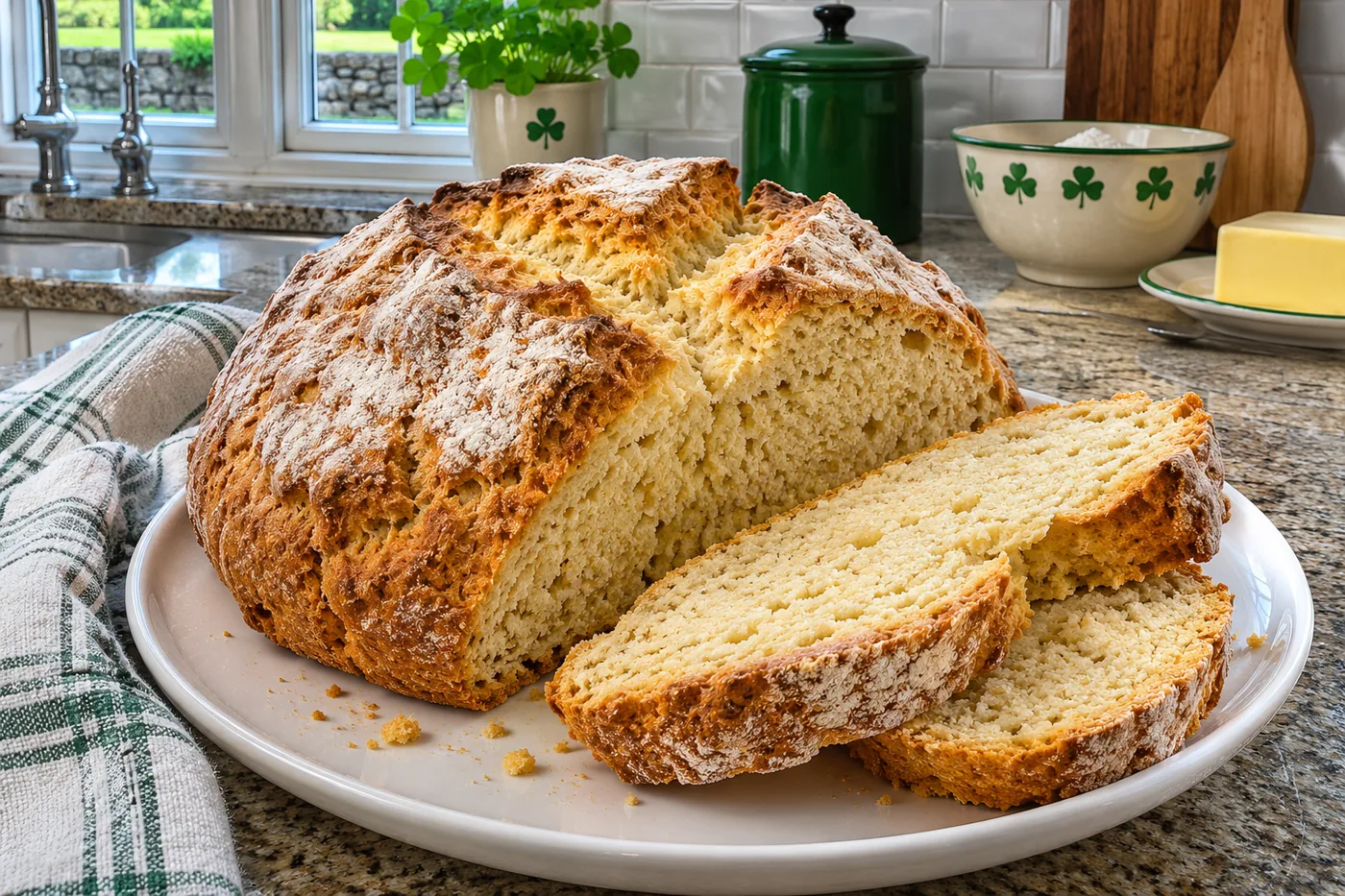
The first time I baked Irish soda bread, I was amazed by how quickly the dough came together. The warm, comforting aroma filled my kitchen, and I couldn’t believe I had just made this classic Irish soda bread with buttermilk from scratch.
What sets this recipe apart is the perfect balance of tangy buttermilk and a hint of sweetness. It creates a soft, tender crumb that keeps you coming back for more, making it tempting!
Why This Recipe Works
- Flour's Role: The all-purpose flour provides the structure needed for Irish soda bread. Its protein content forms gluten, which gives the bread its chewy texture. I found that using a mix of all-purpose and whole wheat flour added a nice nuttiness without compromising the bread's integrity.
- Baking Soda Activation: Baking soda is a key leavening agent in this recipe. When combined with the acidic buttermilk, it releases carbon dioxide, creating those delightful air pockets. I made several batches, and it became clear that using room temperature buttermilk yields the best rise.
- Caraway Seeds: Caraway seeds impart a unique flavor that enhances the bread's taste. Their aromatic oils release during baking, enhancing the overall experience. I experimented without them, but the bread felt flat in flavor, so I always recommend including them.
- Honey's Subtle Sweetness: Incorporating honey adds a hint of sweetness that balances the savory elements of the bread. It also contributes to browning, giving the crust a lovely golden hue. After trying it both with and without honey, I found that the sweetness makes a pleasureful difference.
Ingredients
What You'll Need
- 4 cups all-purpose flour use a good quality flour for a sturdy bread structure.
- 1 tsp baking soda this is the key leavening agent that helps the bread rise.
- 1 tsp salt it enhances flavor and balances the sweetness.
- 1 cup buttermilk, at room temperature the acidity reacts with baking soda for a tender crumb.
- 1 tbsp honey, optional adds a touch of sweetness, but you can skip it if you prefer.
- 1 tbsp unsalted butter, melted for brushing on top, adding a lovely shine and flavor.
- 1 tbsp caraway seeds, optional they give a distinct flavor, but can be omitted if you’re not a fan.
- 1 tsp baking powder provides extra lift for a lighter texture.
Step-by-Step Instructions
Prep & Mix
- Preheat your oven to 425°F and line a baking sheet with parchment paper — this ensures the bread bakes evenly and doesn’t stick.
- In a large mixing bowl, whisk together the flour, baking soda, baking powder, salt, and caraway seeds (if using) until well combined — this helps to evenly distribute the leavening agents for a nice rise.
- Make a well in the center of the dry ingredients to create a pocket for the wet ingredients — this helps prevent flour from flying everywhere when you mix.
- Pour the buttermilk and honey (if using) into the well and mix with a wooden spoon until a sticky dough forms — you want it to be shaggy, not too smooth, for great texture. If the dough feels too dry, add a splash of buttermilk gradually until it holds together.
Shape & Bake
- Turn the dough out onto a floured surface and knead gently for about 1-2 minutes until it comes together — be careful not to over-knead, or your bread will be tough.
- Shape the dough into a round loaf, about 1.5 inches thick, ensuring it has a nice uniformity for even baking — it should feel slightly tacky, but not overly sticky.
- Place the loaf on the prepared baking sheet and score a deep cross on top with a sharp knife — this allows steam to escape and helps the bread rise beautifully.
- Brush the top of the loaf with melted butter for a golden, flavorful crust — it will smell divine as it bakes!
- Bake in the preheated oven for 30 minutes, until the crust is golden brown and sounds hollow when tapped on the bottom — that hollow sound is the key to knowing it’s ready.
Cool & Serve
- Remove the bread from the oven and let it cool on a wire rack for at least 10 minutes before slicing — this allows the interior to set and makes slicing easier.
- Slice the Irish soda bread and serve warm with butter or jam — the warm, inviting aroma will make it hard to resist taking a bite right away.
Tips & Tricks
Don’t Skip the Flour Dusting
I always dust my work surface generously with flour before kneading the dough. This simple step not only prevents sticking but also helps maintain the dough's texture. Trust me, I've had my share of sticky disasters when I forgot this part! A lightly floured surface allows for easy handling and shaping, ensuring your Irish soda bread rises beautifully.
The Importance of Scoring
Scoring the top of the loaf before baking is crucial. I use a sharp knife to make a deep X in the center, which allows steam to escape and gives the bread a nice rise. If you skip this step, you might end up with a dense loaf that doesn't have that lovely crust you want. So grab that knife and make those cuts!
Pro Tips
- Use a Heavy-Duty Baking Sheet: A sturdy baking sheet helps distribute heat evenly, preventing the bottom of your Irish soda bread from burning. I've had uneven results with lightweight pans, leading to a crusty bottom that was less than ideal.
- Let Dough Rest Before Baking: Allowing the shaped dough to rest for about 10-15 minutes before baking helps the gluten relax, leading to a more tender crumb. I’ve found that this extra time pays off in texture and overall flavor.
- Experiment with Flours: Mixing different flours, like whole wheat or spelt, can add depth of flavor and a nutty taste to your soda bread. I’ve played around with ratios, and a 50/50 blend often results in a fantastic rustic loaf.
- Brush with Buttermilk Before Baking: Brushing the top of the loaf with extra buttermilk right before it goes into the oven enhances browning and gives a beautiful crust. This little step is something I never skip after realizing how much it improves the final look.
- Add Sweet Elements: Incorporating elements like raisins or dried cranberries can bring a pleasureful sweetness to the bread. When I tried this, it transformed the bread into a perfect companion for breakfast or tea.
Variations & Customizations
Flavor Twists
Cheddar and Chive
Add 1 cup shredded sharp cheddar cheese and ¼ cup chopped fresh chives to the dough for a savory twist. The cheese melts into gooey pockets, while the chives add a fresh, oniony flavor that brightens every bite.
Cranberry Orange
Mix in 1 cup dried cranberries and the zest of 1 orange. This version is slightly sweet and tangy, with bursts of fruity flavor and a lovely golden hue from the citrus zest.
Storage & Meal Prep
Room Temperature
Irish soda bread stays fresh at room temperature for up to 2 days when stored in a paper bag or wrapped in a clean kitchen towel. Avoid using plastic, as it traps moisture and can make the crust soggy.
Refrigerator
In the refrigerator, it can last for about a week if you let it cool completely, then wrap it tightly in plastic wrap or foil. This helps maintain its moisture while preventing it from drying out.
Freezer
You can freeze Irish soda bread for up to 3 months. Wrap each loaf individually in plastic wrap, then place them in a freezer-safe bag for the best protection. To thaw, simply remove from the freezer and let it sit at room temperature for a few hours or overnight.
Meal Prep
I recommend doubling the recipe if you want to enjoy it throughout the week. Prep it the night before or on the weekend, as it tastes best fresh. Store in a sealed container, and it'll stay fresh for up to a week in the fridge. For reheating, pop it in a 350°F oven for about 10 minutes to revive that crusty exterior.
Frequently Asked Questions
Why did my Irish soda bread come out flat?
Your Irish soda bread might have turned out flat due to insufficient baking soda or not enough acid to activate it. Make sure you're using fresh baking soda and check that your buttermilk or yogurt is not past its expiration date.
Can I make Irish soda bread gluten-free?
Yes, you can create a gluten-free version by substituting all-purpose flour with a gluten-free flour blend. Just be sure to add a bit of xanthan gum to help with the texture.
How can I enhance the flavor of my Irish soda bread?
To add extra flavor, consider mixing in ingredients like caraway seeds or dried fruit, such as raisins or currants. These additions bring out a lovely sweetness that complements the bread's hearty texture.
Can I freeze Irish soda bread?
Absolutely! You can freeze Irish soda bread by wrapping it tightly in plastic wrap and placing it in a freezer bag. It stays fresh for up to three months; just thaw it at room temperature when you're ready to enjoy.
What can I serve with Irish soda bread?
Irish soda bread pairs wonderfully with butter, jam, or honey for a pleasureful breakfast. It also complements soups and stews perfectly, making it a great side for a hearty meal.
Irish soda bread is one of those comforting recipes that fills your kitchen with warmth and nostalgia, making it perfect for any gathering or quiet evening at home. For an extra kick, try adding a handful of caraway seeds to the dough for that traditional Irish flair. I can't wait to see how yours turns out — share your thoughts in the comments or pin this recipe for later!