
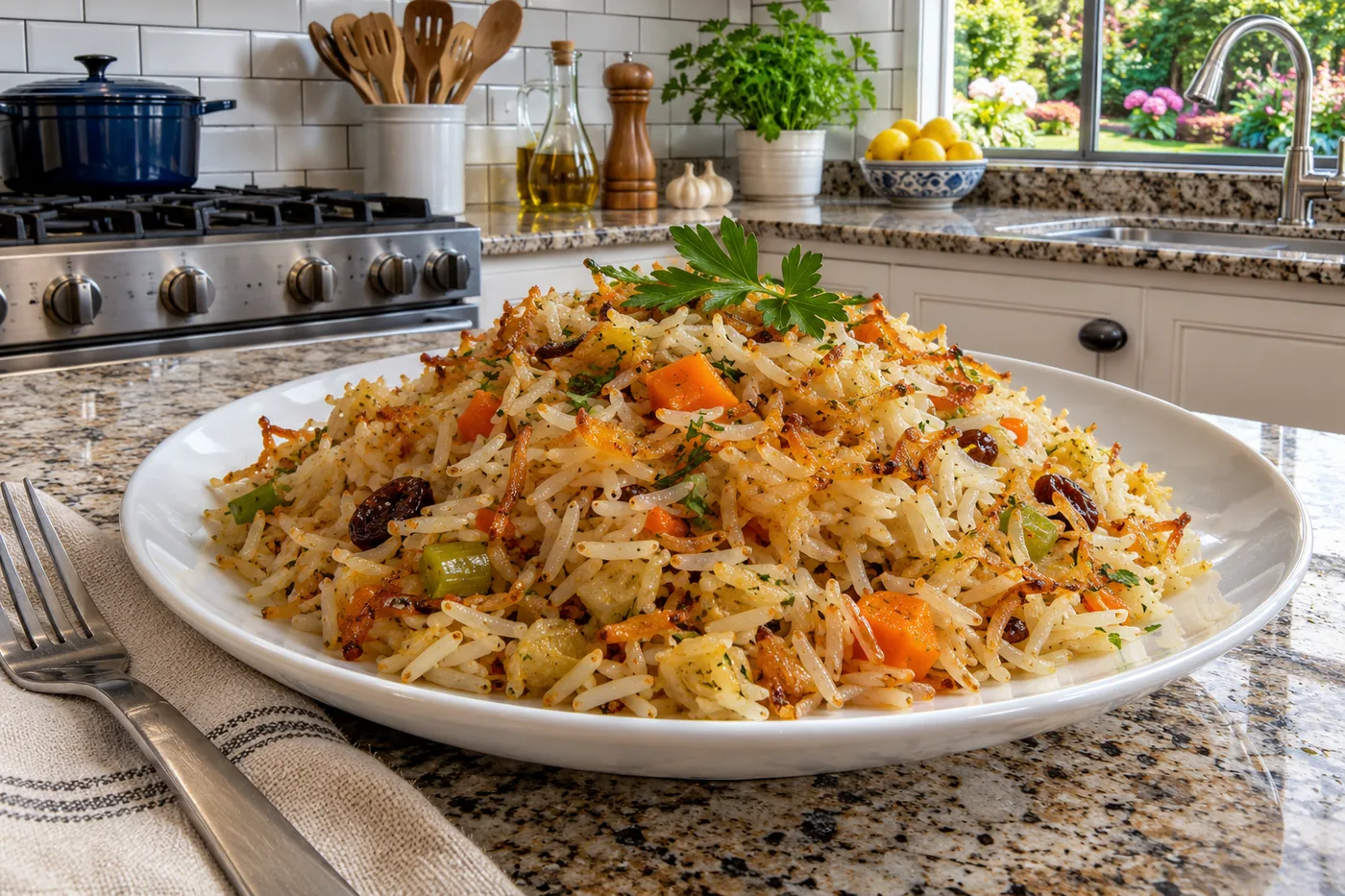
I remember the first time I made rice pilaf for a family dinner. The aroma of sautéed onions and garlic filled the kitchen, and everyone couldn't wait to dig in. This rice pilaf is not just any side dish; it's full of fresh vegetables and herbs that enhance it beyond the ordinary.
What sets this recipe apart from countless others is the unique combination of seasonal veggies and a hint of citrus that brightens every bite, making it a standout on any table.
Why This Recipe Works
- Flavor Base: Sautéing onions, garlic, carrots, and celery in olive oil creates a flavorful foundation for the rice pilaf. This technique releases natural sugars, enhancing the overall taste and giving the dish depth.
- Rinsing Rice: Rinsing the long-grain white rice removes excess starch, preventing the grains from becoming gummy during cooking. I made this pilaf twice before realizing that the rinse is key for achieving that light, fluffy texture.
- Broth for Moisture: Using low-sodium chicken broth instead of water infuses the rice with rich flavor as it cooks. I found that this small swap enhances the pilaf, making it much more satisfying.
- Herbs for Freshness: Adding dried thyme and oregano not only enhances the aroma but also complements the other ingredients. These herbs bring a warmth that balances the dish beautifully.
Ingredients
What You'll Need
- 1 cup long-grain white rice rinsing removes excess starch for fluffier grains.
- 2 cups chicken broth low sodium lets you control the saltiness better.
- 1 medium onion finely chopped for even flavor distribution.
- 2 tbsp olive oil adds richness and helps sauté the vegetables.
- 2 cloves garlic minced for a fragrant punch.
- 1 medium carrot diced for a slight sweetness and color.
- 1 stalk celery diced for crunch and depth.
- 1 tsp salt adjust to taste depending on the broth.
- 1/2 tsp black pepper freshly cracked for a bolder flavor.
- 1/2 tsp dried thyme adds an earthy note that complements the dish.
- 1/2 tsp dried oregano a hint of Mediterranean flavor.
- 1/4 cup fresh parsley chopped for a fresh, vibrant garnish.
When you're picking out your ingredients, look for long-grain white rice for the best texture. Fresh vegetables like the onion, carrot, and celery will enhance the flavor of your rice pilaf, making it aromatic and delicious.
Easy Substitutions
- Dairy-free: swap chicken broth for vegetable broth — the flavor will remain rich but without any animal products.
- Gluten-free: use quinoa instead of rice — it will provide a nuttier taste and a slightly different texture, but still works well with the other ingredients.
- Lower calorie: swap olive oil for a non-stick cooking spray — it will reduce the calories, but you may lose some richness in flavor.
Step-by-Step Instructions
Prep & Sauté
- 1. In a medium saucepan, heat 2 tablespoons of olive oil over medium heat (about 350°F) until it shimmers — this ensures the oil is hot enough to sauté the vegetables without absorbing too much grease.
- 2. Add 1 chopped onion, 1 chopped carrot, and 1 chopped celery stalk, sautéing for about 5 minutes until the onion becomes translucent — this creates a flavorful base for your rice pilaf that smells amazing.
- 3. Stir in 2 minced garlic cloves and cook for an additional 1 minute until fragrant — this step infuses the oil with garlic flavor, enhancing the overall taste of the dish.
Cook the Rice
- 4. Add 1 cup of rinsed rice to the saucepan, stirring to coat it with the oil and vegetables, cooking for 2 minutes — this toasting step adds a nutty flavor to the rice and prevents it from becoming mushy later.
- 5. Pour in 2 cups of chicken broth, 1 teaspoon of salt, 1/2 teaspoon of black pepper, 1 teaspoon of dried thyme, and 1 teaspoon of dried oregano, then bring to a boil — this mixture will season the rice perfectly as it cooks.
- 6. Once boiling, reduce the heat to low, cover, and simmer for 18 minutes — this gentle cooking method allows the rice to absorb all the flavors without burning.
Finish & Serve
- 7. After 18 minutes, remove the saucepan from heat and let it sit, covered, for 5 minutes — this resting time allows the rice to finish cooking and steam, ensuring a fluffy texture.
- 8. Fluff the rice gently with a fork and stir in 1/4 cup of chopped fresh parsley — this adds a pop of color and freshness to your rice pilaf.
- 9. Serve warm as a pleasureful side dish or base for your favorite protein — the inviting aroma will have everyone eager to dig in.
Tips & Tricks
The Importance of Rinsing Rice
Rinsing your rice before cooking is a simple step that makes a world of difference. I always give my rice a good rinse under cold water until the water runs clear. This removes excess starch, which can make your rice pilaf gummy and clump together. Trust me, nobody wants a sticky mess when you’re aiming for fluffy grains.
Broth vs. Water: Flavor Impact
Using broth instead of plain water can enhance your rice pilaf to another level. I learned this after one too many bland batches. The flavor from broth seeps into the rice, giving it a depth that water simply can’t provide. You can choose vegetable, chicken, or any broth you like, but I personally love a rich chicken broth for its savory notes.
Pro Tips
- Toast the Rice for Flavor: Before adding any liquid, toast your rice in a bit of oil until it’s lightly golden. This enhances the nutty flavor and adds a depth that enhances your rice pilaf. I always take this extra step; it makes such a difference!
- Add Aromatics Early: Sauté onions or garlic in your oil before adding the rice. Their flavors infuse the grains as they cook, creating a beautifully fragrant base. I love the aroma that fills my kitchen during this step!
- Use a Tight-Fitting Lid: When cooking your rice pilaf, ensure you use a lid that fits snugly. This traps steam and moisture, cooking the rice evenly and preventing it from drying out. I learned this the hard way; my first batch was too dry because I didn’t cover it properly.
- Let It Rest After Cooking: Allow your rice pilaf to sit covered for about 10 minutes after cooking. This resting period lets the grains firm up and absorb any remaining moisture. Trust me, it makes serving so much easier!
- Fluff with a Fork, Not a Spoon: When it’s time to serve, use a fork to fluff your rice pilaf instead of a spoon. This separates the grains without mashing them together, keeping the texture light and airy. I never skip this step!
Variations & Customizations
Flavor Twists
Lemon Herb
Add the zest of 1 lemon and 2 tbsp of freshly squeezed lemon juice to the broth while cooking. The result is a bright, zesty pilaf with a refreshing citrus aroma that pairs wonderfully with grilled chicken or fish.
Mediterranean Delight
Stir in 1/2 cup diced sun-dried tomatoes and 1/3 cup sliced black olives just before serving. This variation brings a rich, savory flavor with a hint of tanginess, creating a stunning visual with pops of red and black.
Seasonal Versions
Fall Harvest
Incorporate 1/2 cup diced butternut squash and 1/2 tsp ground cinnamon to the broth. The pilaf takes on a warm, comforting flavor with a hint of sweetness, perfect for cozy autumn meals.
Storage & Meal Prep
Room Temperature
Store rice pilaf at room temperature for up to 2 hours in an airtight container. This prevents moisture from building up and keeps it from getting soggy.
Refrigerator
In the refrigerator, rice pilaf lasts for about 4 days. Use a glass or plastic container with a tight-fitting lid, and make sure to let it cool completely before storing to avoid condensation.
Freezer
You can freeze rice pilaf for up to 3 months. Flash freeze it on a sheet pan first to prevent clumping, then transfer to freezer-safe bags or containers. Thaw it overnight in the refrigerator before reheating.
Meal Prep
I recommend doubling the recipe if you want leftovers for a few days. Prep it the night before or over the weekend, and store it in airtight containers. It stays fresh for about 4 days in the fridge, and reheat in the microwave for 2-3 minutes or until heated through.
Frequently Asked Questions
Can I use brown rice instead of white rice for pilaf?
Yes, you can use brown rice, but keep in mind that it requires a longer cooking time and more liquid. Adjust the ratio to about 2 1/2 cups of broth for every cup of brown rice and increase the cooking time to around 40-45 minutes.
Why did my rice pilaf turn out mushy?
If your rice pilaf is mushy, it’s likely due to using too much liquid or overcooking the rice. Make sure to measure your broth accurately and keep an eye on the cooking time.
Can I make rice pilaf ahead of time?
Absolutely! You can prepare rice pilaf a day in advance and reheat it when needed. Just add a splash of broth or water while reheating to keep it moist.
What can I add to rice pilaf for extra flavor?
Consider adding toasted nuts like almonds or pine nuts for crunch, or dried fruits like raisins or cranberries for sweetness. Fresh herbs like parsley or cilantro also brighten up the dish beautifully.
Is rice pilaf gluten-free?
Yes, rice pilaf is typically gluten-free since it’s made with rice and vegetables. Just double-check any broth or additional ingredients to ensure they don’t contain gluten.
This rice pilaf is my favorite side dish because it brings such warmth and flavor to any meal, making even the simplest dinner feel special. For an extra layer of deliciousness, consider adding toasted nuts or dried fruit for a pleasureful crunch and sweetness. I can't wait for you to try this — share your experience in the comments or save it to your Pinterest for later!