
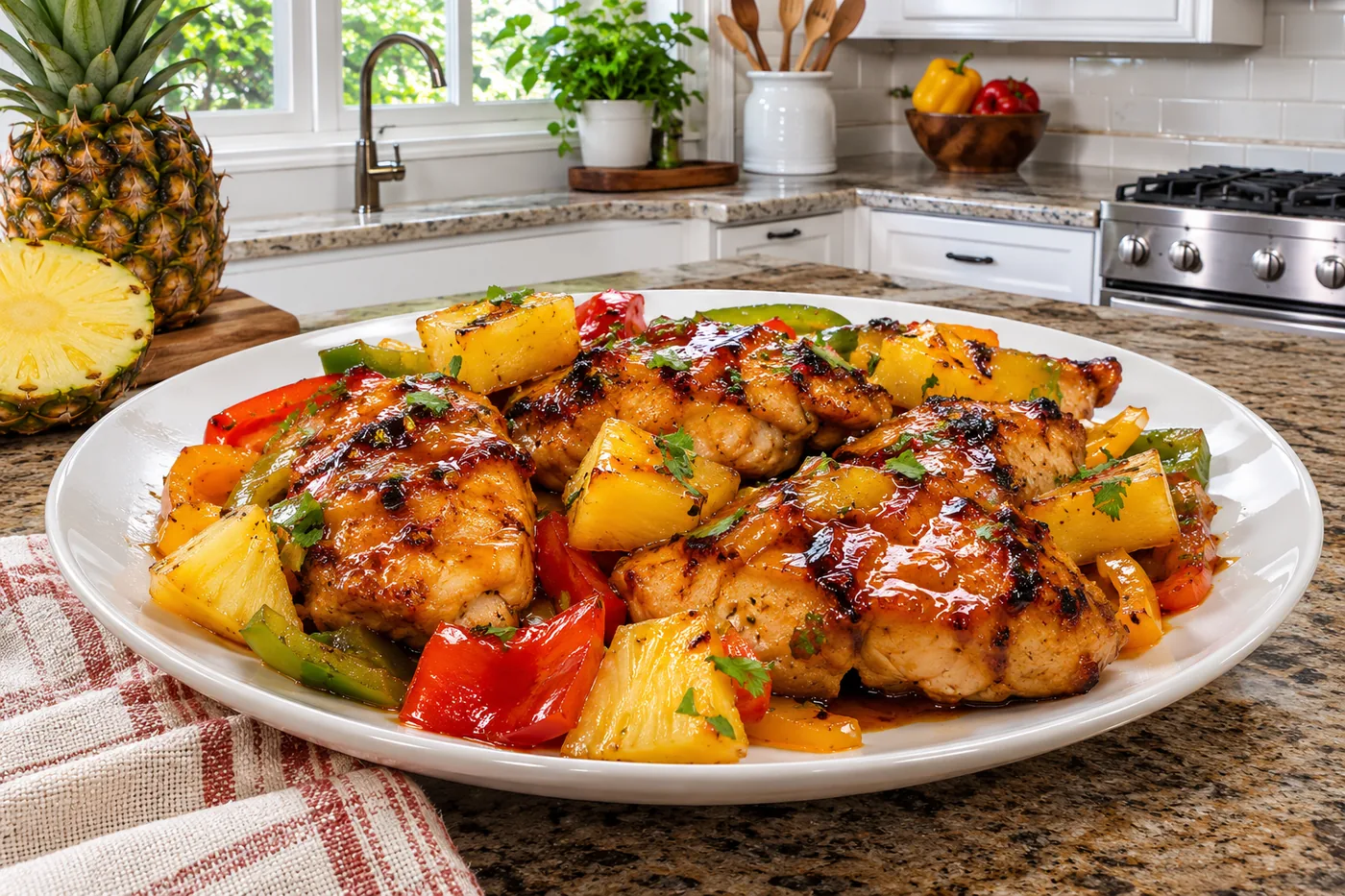
I remember the first time I tasted Hawaiian chicken at a friend's barbecue. The sweet and savory combination of the juicy chicken thighs with fresh pineapple was memorable, and I knew I had to recreate it myself.
What sets this recipe apart is the perfect balance of flavors achieved through a homemade marinade that includes soy sauce and a hint of ginger, ensuring every bite bursts with tropical goodness.
Why This Recipe Works
- Tender Chicken Thighs: Using boneless chicken thighs ensures the meat remains juicy and tender during cooking. Thighs have more fat compared to breasts, which helps prevent drying out and adds a rich flavor to the dish.
- Sweet and Tangy Balance: The combination of brown sugar and apple cider vinegar creates a pleasureful sweet and tangy flavor profile. The sugar caramelizes during cooking, giving a beautiful glaze while the acidity from the vinegar balances out the sweetness, enhancing the overall taste.
- Umami Boost from Soy Sauce: Low-sodium soy sauce adds depth to the dish without overwhelming saltiness. It provides that savory umami flavor that complements the sweetness of the pineapple perfectly, making each bite satisfying.
- Fresh Ingredients Make a Difference: Using fresh pineapple chunks instead of canned ones enhances the dish with brighter, more vibrant flavors. I tested this recipe with both, and the fresh pineapple brought a tempting juiciness and aroma that the canned version just couldn't match.
Ingredients
What You'll Need
- 1.5 lb boneless chicken thighs the thighs stay juicy and flavorful when cooked; avoid breasts for a dry result.
- 2 tbsp olive oil this helps to brown the chicken and adds richness; use a good quality for better flavor.
- 1 tsp salt essential for enhancing all the flavors in the dish; adjust based on preference.
- 1/2 tsp black pepper adds a subtle heat; fresh ground is best for maximum flavor.
- 1 cup pineapple chunks fresh will give a brighter flavor, but canned is convenient; make sure it's packed in juice, not syrup.
- 1/4 cup soy sauce low-sodium helps control the saltiness; adds umami depth to the dish.
- 2 tbsp brown sugar balances the acidity of the pineapple; light or dark works, but dark gives a deeper flavor.
- 1 tbsp apple cider vinegar adds a tangy kick that complements the sweetness of the pineapple.
- 1 tsp garlic powder for a hint of savory depth; fresh garlic can be used, but adjust quantity.
- 1 tsp ginger powder brings warmth and a slight spice; fresh ginger is a great substitute if you have it.
- 2 tbsp green onions, sliced for a fresh, crunchy garnish that adds color and flavor.
- 1/4 cup sesame seeds adds a nutty crunch and visual appeal; toasting them enhances their flavor.
When making Hawaiian chicken, look for high-quality chicken thighs and fresh pineapple for the best results. The combination of flavors from the soy sauce and pineapple creates a deliciously balanced dish that’s hard to resist.
Easy Substitutions
- Dairy-free: swap soy sauce for coconut aminos — the dish will be slightly sweeter and less salty.
- Gluten-free: replace soy sauce with tamari — this keeps the umami flavor intact while making it gluten-free.
- Lower calorie: use a sugar substitute for brown sugar — this will reduce calories but may alter the sweetness slightly.
Step-by-Step Instructions
Prep & Mix
- Preheat your oven to 425°F and line a sheet pan with parchment paper to prevent sticking and make cleanup easier.
- In a large bowl, toss the chicken with olive oil, salt, and black pepper until coated; this helps the seasonings stick and enhances flavor with every bite.
- In another bowl, combine pineapple chunks, soy sauce, brown sugar, apple cider vinegar, garlic powder, and ginger powder until well mixed; the sweetness from the pineapple and brown sugar balances the savory soy sauce beautifully.
- Pour this sauce over the chicken and mix until everything is evenly coated, ensuring that every piece absorbs that delicious flavor.
Bake & Rest
- Spread the chicken mixture evenly on the prepared sheet pan, making sure not to overcrowd the pieces; this allows for even cooking and browning.
- Bake in the preheated oven for 20 minutes, or until the chicken is cooked through and reaches an internal temperature of 165°F; you’ll know it’s done when the edges are slightly caramelized and the chicken is no longer pink inside.
- Once cooked, remove the sheet pan from the oven and let it rest for 5 minutes; this helps the juices redistribute, keeping the chicken tender and juicy.
Garnish & Serve
- Garnish the chicken with sliced green onions and sprinkle sesame seeds on top for a pop of color and crunch; this adds freshness and texture to the dish.
- Serve the Hawaiian chicken warm alongside rice or noodles, allowing the flavors to meld perfectly on your plate.
Tips & Tricks
Chicken Marinade Magic
Letting your chicken marinate for at least 30 minutes can make a world of difference. I’ve found that even a quick soak allows the flavors to penetrate deeper, making each bite burst with that sweet and savory goodness. If you have the time, marinating it overnight in the refrigerator is even better, as it helps tenderize the meat and enhances the flavor profile.
Fresh Pineapple vs. Canned
Using fresh pineapple makes a noticeable difference in flavor and texture. I once used canned pineapple in a pinch, and while it was still good, the fresh version added a vibrant sweetness and juiciness that really elevated the dish. If you can, go for fresh; it’s worth the extra effort, and you'll appreciate the lovely aroma it brings to the kitchen.
Pro Tips
- Use Chicken Thighs for Juiciness: Chicken thighs are more forgiving than breasts, remaining tender and juicy even if slightly overcooked. I always opt for thighs in this recipe, as they soak up the flavors better and add a rich depth to the dish.
- Broil for Extra Caramelization: For an added layer of flavor, broil the chicken for the last 2-3 minutes of cooking. Keep a close eye on it, though; that golden, crispy edge is oh-so-delicious but can turn quickly!
- Make Sauce Ahead of Time: You can make the sauce a day in advance and store it in the fridge. This not only saves time but allows the flavors to meld beautifully, enhancing the overall taste when you finally bake the chicken.
- Add Fresh Herbs Before Serving: A sprinkle of fresh cilantro or green onions right before serving brightens the dish and adds a fresh contrast to the sweetness. I love the burst of flavor and color it brings!
- Use a Meat Thermometer: To ensure perfect doneness, I highly recommend using a meat thermometer. Chicken can look done on the outside but still be undercooked inside, so aim for that perfect 165°F for safety and flavor.
Variations & Customizations
Flavor Twists
Teriyaki Style
Replace the soy sauce with 1/4 cup teriyaki sauce and add 1 tbsp sesame oil. The teriyaki version is sweeter and has a rich, glossy finish that clings to the chicken, giving it a pleasureful sticky texture.
Spicy Mango
Substitute the pineapple chunks with 1 cup diced fresh mango and add 1 tbsp sriracha. This variation brings a vibrant color and a sweet, spicy kick that dances on your palate, perfect for those who love a bit of heat.
Creative Twists
Tropical Coconut
Add 1/2 cup unsweetened shredded coconut and replace the olive oil with 2 tbsp coconut oil. The coconut version has a chewy texture and a subtle creaminess that enhances the sweetness of the pineapple, transporting you straight to a tropical paradise.
Storage & Meal Prep
Room Temperature
Hawaiian chicken can sit at room temperature for up to 2 hours in a covered container. Any longer, and you'll want to toss it to be safe.
Refrigerator
In the fridge, store your Hawaiian chicken for up to 4 days in an airtight container. Make sure it cools completely before sealing it; otherwise, condensation will make it soggy.
Freezer
You can freeze Hawaiian chicken for up to 3 months. For the best results, wrap individual portions tightly in plastic wrap and then place them in a freezer bag. Thaw overnight in the fridge before reheating.
Meal Prep
I recommend preparing 1.5 times the recipe for meal prep. Cook it on the weekend and store in glass containers for easy reheating. It stays fresh for about 4 days in the fridge. To reheat, pop it in the microwave for 2-3 minutes or warm it in the oven at 350°F for about 15 minutes until heated through.
Frequently Asked Questions
Can I use chicken breasts instead of thighs for Hawaiian chicken?
Yes, you can use chicken breasts, but they may dry out more quickly than thighs. If you choose breasts, consider marinating them longer to help keep them juicy.
How can I make Hawaiian chicken gluten-free?
To make this dish gluten-free, simply use tamari or a gluten-free soy sauce alternative. Both options will provide the same savory flavor without the gluten.
Why did my Hawaiian chicken turn out dry?
If your chicken came out dry, it may have been overcooked or not marinated long enough. Make sure to check the internal temperature and aim for 165°F for perfectly juicy results.
What can I serve with Hawaiian chicken?
Pair Hawaiian chicken with coconut rice for a tropical vibe, or serve it with a fresh salad to balance the sweetness. Grilled vegetables also make a great side!
Can I make Hawaiian chicken ahead of time?
Absolutely! You can marinate the chicken a day in advance and store it in the fridge. Just remember to keep it airtight to lock in those flavors.
Hawaiian chicken brings a taste of the islands right to your kitchen, and it always impresses my family at dinner. For an extra touch of flavor, grill the chicken to get those delicious char marks — it makes all the difference. Give it a try, and let me know how it turns out in the comments or tag me on Pinterest!